Midtown Manhattan, NY

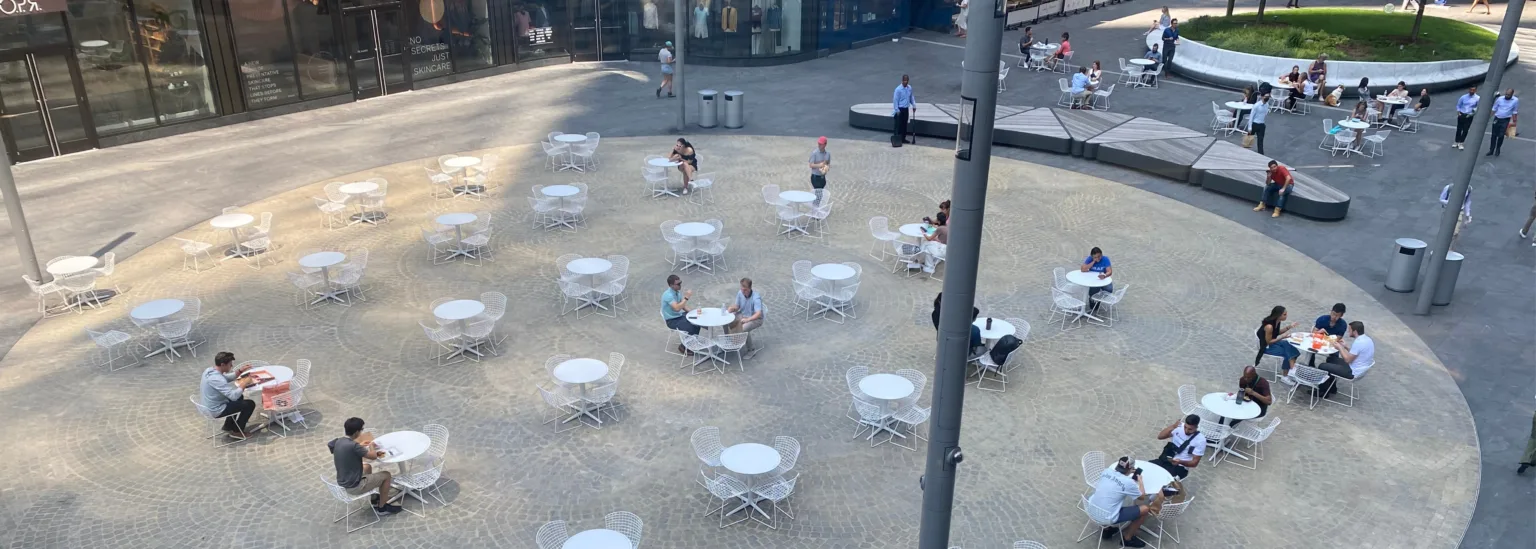
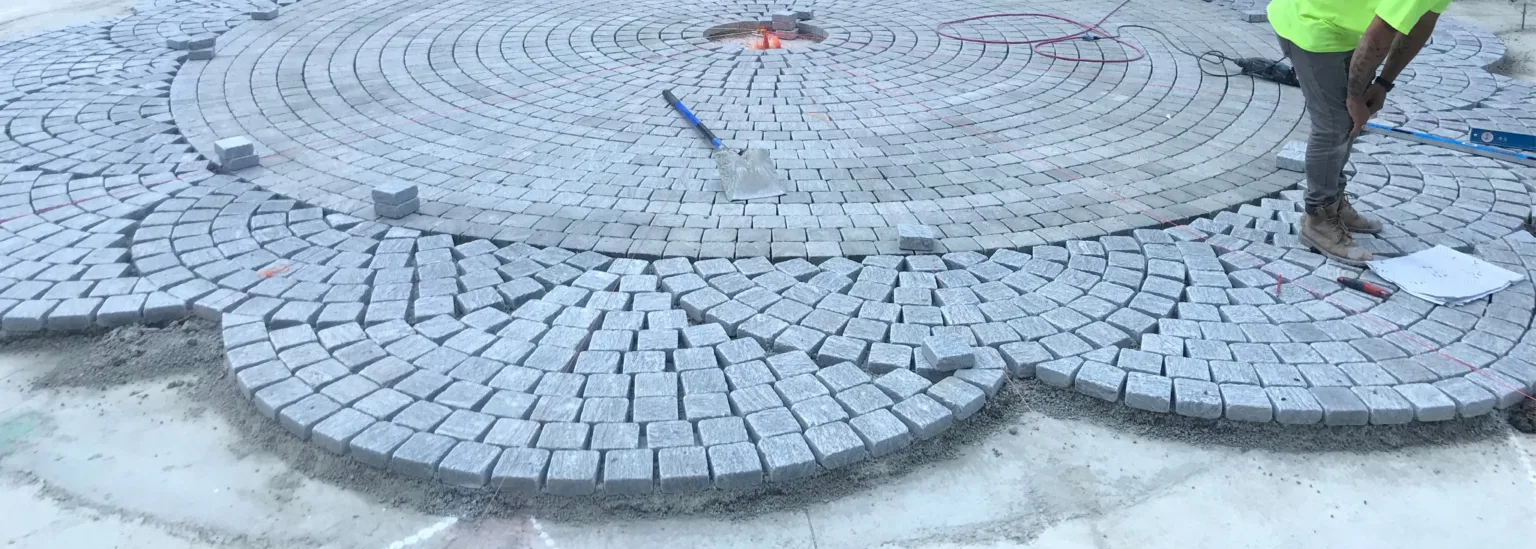
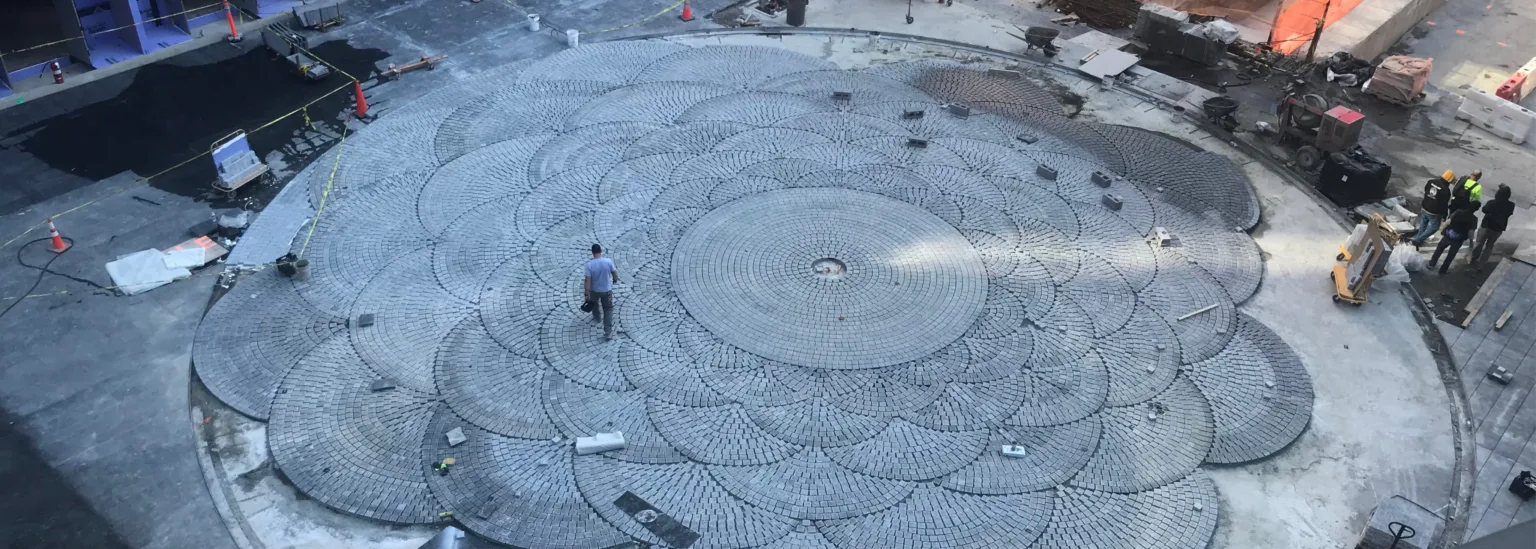
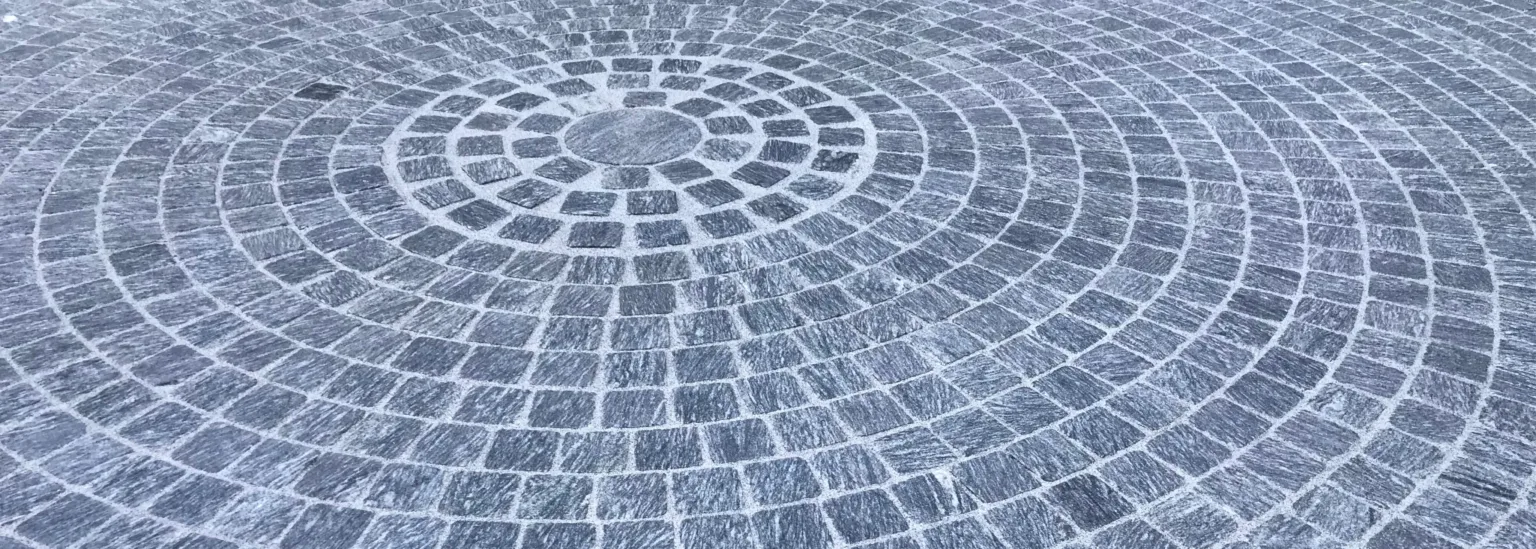
Most plaza paving gets broken up by control joints, and the designer either works with those lines or hides them. At Manhattan West, the design called for a cobblestone inlay that reads as one continuous piece of ground, set into a Midtown plaza that carries service vehicles as well as heavy foot traffic. Installed in 2019 across roughly 8,000 square feet for Brookfield Properties, to a design by James Corner Field Operations, the pavement had to hold that pattern intact, take the loads, and manage its own water with almost no visible surface drainage.
PRODUCT SELECTION
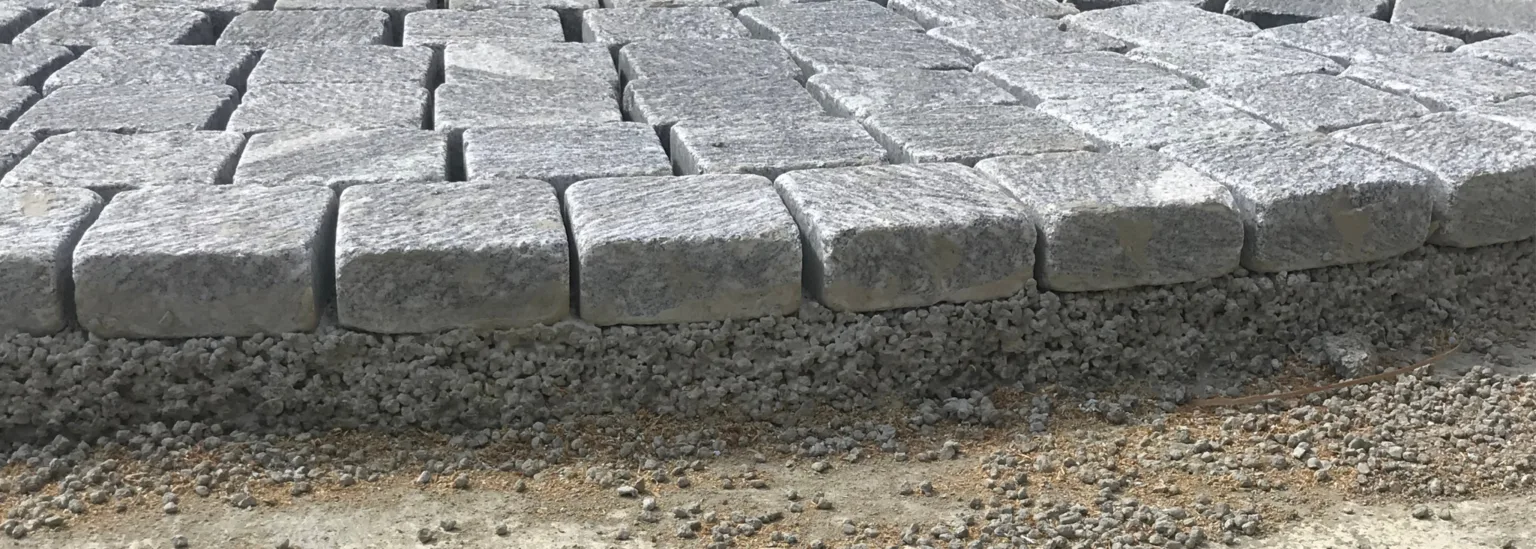
The plaza was built as a full ROMEX System Guarantee assembly: ROMEX TRASS BED at 2 to 2.5 inches, ROMEX ADHESION ELUTRIANT as the bonding layer, and ROMEX D2000 in the joints.
ROMEX TRASS BED is a permeable, frost resistant bedding compound that replaces a concrete mud slab, mixed on site with ASTM #9 stone. Pavers set into it wet-on-wet with ROMEX ADHESION ELUTRIANT on the back of each unit cure to the bed, so the field behaves as one bonded surface instead of a collection of pieces that need relief joints to move.
ROMEX D2000 is the strongest jointing mortar in the line, rated up to 25 tons on its own and up to 40 tons within the RSG assembly, built for streets, public areas, and the street cleaning equipment that comes with them. It suits joints over 1/4 inch, which is what a cobble pattern produces.
PROJECT LOCATION
Manhattan West occupies the blocks between Penn Station and Hudson Yards on the far west side of Midtown, built over active rail yards and now one of the busiest pedestrian corridors in the city. The plaza ties into the High Line, the elevated park that runs roughly thirty blocks above the street and remains New York’s most visited attraction, so the ground plane here takes commuter, resident, and tourist traffic in volume. Winters bring hard freeze-thaw cycling and de-icing salt, summers heat and humidity.
PROJECT NEEDS
The central problem was the cobblestone inlay. A pattern at that scale would normally be divided by control joints, and dividing it would have cut through the figure the design was built around. At the same time the plaza had to carry vehicular loading alongside sustained pedestrian traffic, which is exactly the condition control joints are usually there to serve. Water was the third constraint: with visible surface drains kept to a minimum, the pavement had to move stormwater within itself.
PROJECT SOLUTION
Bonding the pavers answered the first two demands together. Set wet-on-wet into ROMEX TRASS BED with ROMEX ADHESION ELUTRIANT, the units cure to the bed and cannot shift, so the inlay reads as a single uninterrupted field while carrying vehicles across it. ROMEX D2000 holds those joints under the load and resists the de-icing salt and pressure washing a Midtown plaza sees every year.
Permeability answered the third. TRASS BED carries traffic loads up to 40 tons while staying open to water, with published infiltration rates up to 700 inches per hour, and D2000 is a permeable joint, so rainfall moves down through the joint and the bed instead of collecting on top. That is what let the drainage stay nearly invisible. The completed build-up is the fully bonded assembly covered by the RSG-10 ten-year manufacturer warranty, on a plaza now in continuous public service for seven years.
Permeable paving for heavy foot traffic and service vehicles
Midtown Manhattan, NY
2019
Commercial